Go to Market Strategy Europe: How to Build a Successful B2B Market Entry Plan
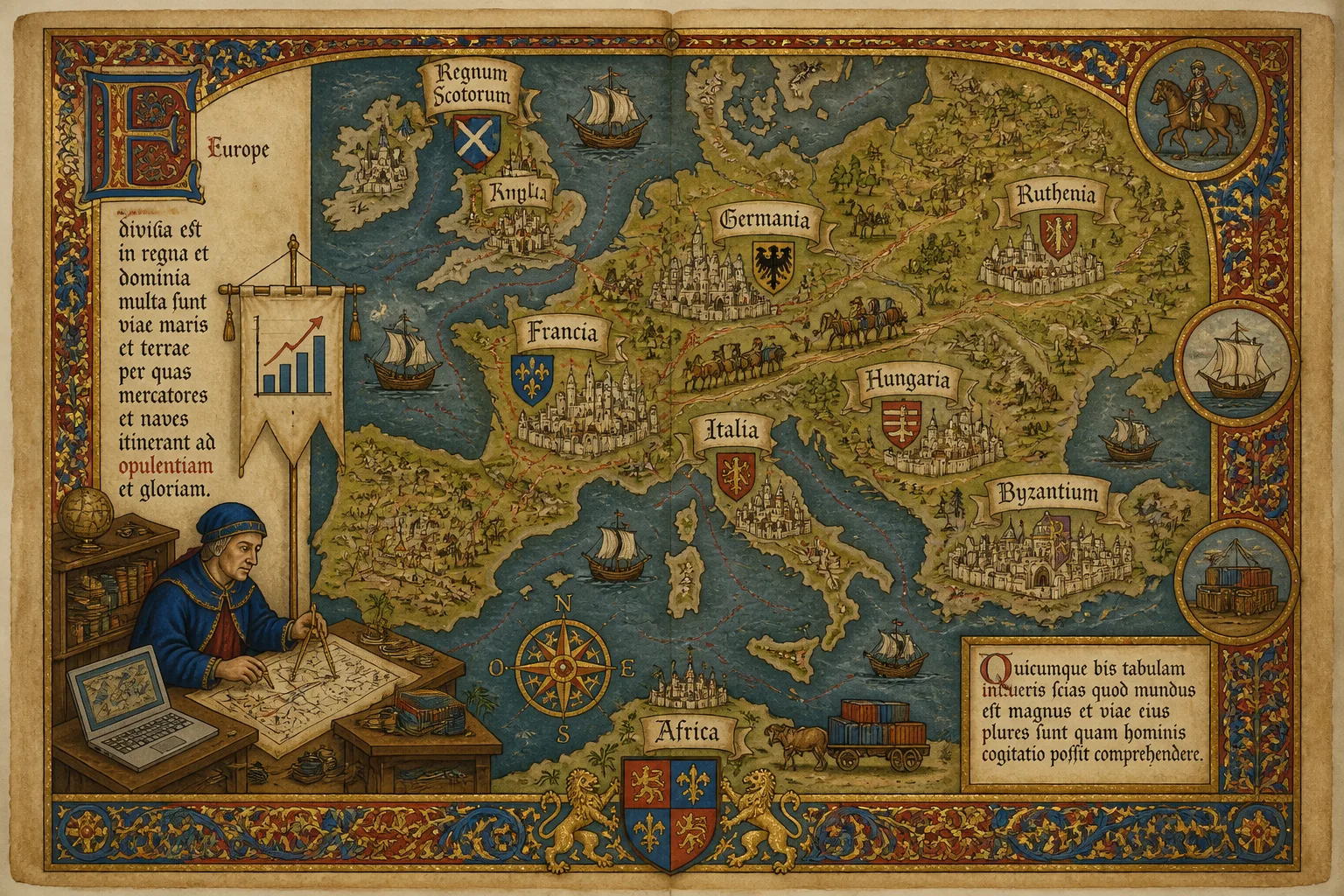
A successful go to market strategy Europe requires companies to understand an apparent contradiction at the heart of the European Union.
From an economic and regulatory perspective, the EU offers access to one of the world's largest integrated markets. It brings together around 450 million people and approximately 23 million companies, with goods, services, capital and people circulating across 27 Member States under the Single Market framework.
From a commercial perspective, Europe remains highly diverse.
A buyer in Germany can have different expectations from one in Italy. A value proposition that attracts companies in the Netherlands may require adaptation in France. Distribution channels, business culture, language, purchasing behaviour and competitive structures can change substantially across national borders.
This creates two particularly interesting scenarios for B2B companies:
- an EU company expanding into other European Union countries;
- a North American company entering the EU for the first time.
Both can access significant opportunities. Each requires a different starting point.
Why Europe Is Such an Attractive Market
The European Union combines scale with considerable purchasing power.
Eurostat estimates the EU population at approximately 450.4 million people. Germany, France and Italy alone account for almost half of that population.
The Single Market gives European businesses access to this customer base within a common economic framework. EU rules facilitate the movement of goods and services and provide harmonised requirements across many product categories.
Europe is also deeply connected to international trade.
The European Commission describes the EU as the world's largest exporter of services and the second-largest exporter of goods. This creates a large ecosystem of manufacturers, professional services companies, technology businesses, distributors and specialist SMEs operating across international value chains.
For B2B companies, this means that European market entry can provide access to customers that themselves operate globally.
The opportunity, however, becomes much easier to capture when Europe is approached as a portfolio of markets rather than a single homogeneous customer base.
Europe Has One Market and Many Buying Cultures
The European Single Market provides a common foundation for doing business. Commercial behaviour remains strongly influenced by individual countries.
Europe contains:
- different languages;
- different levels of purchasing power;
- different industrial concentrations;
- different business cultures;
- different distribution models;
- different levels of digital maturity;
- different attitudes toward international suppliers;
- different decision-making processes.
Economic differences alone can be substantial.
Eurostat's 2025 purchasing-power data show GDP per capita ranging from 68% of the EU average in Bulgaria and Greece to 239% in Luxembourg. Germany, the Netherlands, Denmark and several northern European countries sit above the EU average, while major economies such as France, Italy and Spain have their own purchasing-power profiles.
These differences influence how companies price, position and sell their products.
For a B2B market entry strategy, country selection therefore matters as much as European market size.
Scenario 1: An EU Company Expanding Into Other EU Markets
For a company already based within the European Union, international expansion starts from a favourable position.
The EU Single Market facilitates cross-border business by creating common frameworks in many areas. Goods lawfully marketed in one EU country can often circulate across the Single Market, subject to the applicable harmonised or national rules.
This reduces several structural barriers to expansion.
A French software company can target customers in Belgium. An Italian machinery manufacturer can build a sales network in Germany. A Dutch B2B service company can develop customers in Spain.
The strategic challenge moves toward choosing where to expand first.
Start With Market Prioritisation
The geographic proximity of European countries can make simultaneous expansion tempting. A stronger approach is to score potential markets according to relevant commercial criteria.
These can include:
- addressable market size;
- number of companies matching the ICP;
- industry concentration;
- average customer value;
- competitive intensity;
- existing brand awareness;
- language requirements;
- sales cycle;
- distribution structure;
- current inbound demand.
A company selling industrial automation, for example, may find substantially more opportunity in Germany and northern Italy than in countries with smaller manufacturing sectors. A SaaS provider targeting financial services might reach a very different conclusion.
The goal is to identify where the company's specific offer has the strongest probability of gaining traction.
Look for Market Density
Population is only one indicator of market attractiveness. For B2B companies, customer density can be more useful.
Imagine an industrial supplier whose ideal customers are specialist food manufacturers. A European country with 50 million inhabitants may initially look more interesting than one with 10 million. Yet the smaller country could contain a dense cluster of the exact manufacturers the supplier wants to reach.
This changes acquisition economics.
Salespeople can cover accounts more efficiently. Trade fairs become more relevant. Distributors can reach a higher proportion of the market. Account-based marketing campaigns can focus on a defined group of companies.
A European go-to-market strategy should therefore map companies, sectors and clusters before allocating budget.
Localise the Value Proposition
A product can remain identical across Europe while its strongest sales argument changes from country to country.
Consider a software platform that reduces production downtime. German prospects might respond strongly to integration, engineering reliability and process efficiency. Italian SME manufacturers might place greater emphasis on implementation flexibility and access to responsive support. Another European market might react strongly to labour savings or regulatory compliance.
These hypotheses need validation through local market conversations.
Useful sources include:
- customer interviews;
- prospects;
- sales teams;
- local distributors;
- industry associations;
- sector specialists;
- existing international customers.
Localisation then becomes a strategic process rather than a translation exercise.
Language Still Matters Inside the EU
English plays a major role in European business, especially within international companies and particular professional sectors. Local languages remain commercially important.
An English-language campaign may successfully reach senior executives in one market while producing weaker engagement among SME owners in another.
Language affects:
- SEO;
- paid search;
- outbound emails;
- landing pages;
- sales presentations;
- technical documentation;
- webinars;
- case studies.
It also influences trust. A company that speaks the customer's language signals commitment to the market and makes commercial interaction easier.
The right level of localisation depends on the target audience, transaction value and complexity of the sales process.
Scenario 2: A North American Company Entering the EU
For North American companies, Europe can represent an especially attractive expansion opportunity. The commercial relationship is already enormous.
EU-US trade in goods and services reached approximately €1.8 trillion in 2025, equivalent to around €4.9 billion in transatlantic trade every day. Mutual investment reached approximately €4.9 trillion based on 2024 figures.
This level of economic integration means that many American companies already operate in European supply chains, even before establishing a dedicated European presence.
A North American company entering Europe, however, faces an additional strategic decision: where should the European operation begin?
"Europe" is still too broad a target market.
Choose a Beachhead Market
A North American company can benefit from selecting one or two initial countries where it can establish product-market fit.
The ideal first country might be the largest market. It could equally be a smaller market offering:
- stronger product fit;
- easier access to customers;
- a higher concentration of target accounts;
- existing customer relationships;
- favourable competition;
- strong local partners;
- easier language adoption.
For some businesses, Germany may be the logical beachhead because of its industrial scale. For others, the Netherlands offers an internationally oriented business environment and strong logistics. France may provide the best concentration of relevant enterprise accounts. Italy may be attractive for companies targeting manufacturing SMEs and specialised industrial clusters.
Our guide on how to enter the Italian market explores one of these markets in greater detail.
The decision should follow ICP density and commercial opportunity.
Understand European Regulation Early
Regulation forms part of European go-to-market planning.
Many product requirements are harmonised across the Single Market, particularly in areas such as machinery, electrical equipment and medical devices. Companies meeting applicable EU requirements can gain access to a much broader market through that common framework.
Digital businesses also need to account for areas such as data protection and privacy.
Tax structure can influence the operating model as well. For qualifying cross-border B2C transactions, for example, the EU's VAT One Stop Shop allows European and international companies to manage relevant VAT obligations through a single registration framework.
The specific requirements depend on:
- product category;
- company structure;
- location;
- sales model;
- data processing;
- employment model;
- customer type.
Legal, tax and compliance specialists can establish the relevant framework. Marketing leadership then needs to incorporate those realities into pricing, customer acquisition and market expansion planning.
Avoid Copying the North American Playbook Country by Country
North American companies often arrive in Europe with a proven go-to-market model. That is an advantage.
Existing positioning, customer data, sales processes and campaign results provide valuable evidence. The next step is identifying which elements transfer directly and which require localisation.
For example, a US SaaS company may currently rely heavily on:
- outbound sales;
- webinars;
- LinkedIn;
- paid search;
- free trials;
- SDR teams.
Those channels can also work in Europe. Their relative effectiveness may change between France, Germany, Italy and the Nordic countries.
Messaging may change as well. European buyers can place different emphasis on data location, contractual terms, implementation, integrations or access to local support.
A strong European strategy preserves the proven commercial engine while calibrating it to each market.
Think in Country Clusters
Expanding one country at a time is only one possible model. Another approach is to group markets according to common commercial characteristics.
DACH
Germany, Austria and German-speaking Switzerland can share linguistic and commercial characteristics, while each market retains its own structure.
Benelux
Belgium, the Netherlands and Luxembourg provide a geographically compact cluster with high levels of international trade.
Southern Europe
Italy, Spain and Portugal can offer opportunities around manufacturing, SMEs and specific sector clusters, with dedicated language requirements.
Nordic markets
Sweden, Denmark, Finland and neighbouring markets can provide attractive opportunities for technology and B2B services.
These clusters can help organise resources. Market validation should still take place at country level.
Build the European Sales Infrastructure Gradually
A company entering Europe has several options for creating commercial presence.
It can use:
- direct sales from headquarters;
- local sales representatives;
- distributors;
- agents;
- strategic partners;
- a European subsidiary;
- local employees;
- outsourced business development.
The right model depends on transaction value and sales complexity.
A €500 monthly SaaS product may support highly digital customer acquisition. A €500,000 industrial machine will usually require deeper local relationships, technical support and direct sales interaction.
The go-to-market model should reflect how customers actually buy.
Why Local Marketing Leadership Matters
As European expansion grows, coordination becomes increasingly important.
Headquarters may manage global positioning. A German agency manages paid media. An Italian distributor generates opportunities. A French sales representative provides customer feedback. Localised websites produce inbound leads across several countries.
Someone needs to connect this information.
A Fractional CMO for European market entry can provide senior marketing leadership without requiring the company to build a complete European marketing department during the initial phase.
The role can include:
- country prioritisation;
- European market research;
- ICP development;
- localisation strategy;
- positioning;
- agency management;
- distributor support;
- lead generation;
- sales and marketing alignment;
- marketing measurement;
- expansion planning.
This model can be valuable for both European SMEs expanding internationally and North American companies building their first presence within the EU.
Our article Should You Hire a Fractional CMO? provides a framework for evaluating when this type of leadership fits an organisation. If you are still comparing delivery models, see also Fractional CMO vs Agency.
Measure Each Market Separately
A European campaign can produce strong aggregate numbers while individual markets perform very differently.
Imagine generating 300 leads across Europe. That figure becomes more useful when divided by country.
Perhaps 150 came from Germany, with 20 becoming qualified opportunities. Another 100 came from Spain, generating five opportunities. The remaining 50 came from the Netherlands and produced 15 opportunities.
Those results reveal very different economics.
European reporting should therefore consider:
- cost per country;
- qualified leads;
- conversion rate;
- sales cycle;
- average deal value;
- customer acquisition cost;
- pipeline generated;
- revenue.
This helps management decide which markets deserve further investment.
Go to Market Strategy Europe: Build Scale Through Local Relevance
The European Union gives companies access to a market of around 450 million people and 23 million businesses through an increasingly integrated economic framework.
That scale makes Europe attractive to both EU companies seeking international growth and North American businesses looking for their next major market.
The strongest go to market strategy Europe starts with segmentation.
For an EU company, this means identifying which neighbouring or regional markets offer the greatest concentration of attractive customers and then adapting the commercial model accordingly.
For a North American company, it means selecting the right European beachhead, understanding the regulatory framework and building local market knowledge before scaling across multiple countries.
In both cases, success comes from combining the advantages of the Single Market with country-level understanding.
One European strategy can provide the overall direction. Local insight determines how that strategy becomes commercially relevant in Germany, Italy, France, Spain, the Netherlands or any other individual market.
Europe offers scale. Its diversity tells you where and how to capture it.
Want to talk it through?
If this article raised questions about your own marketing, a 30-minute intro call is the fastest way to find out whether I can help.