Fractional CMO vs Agency: Which Is the Right Choice for Your B2B Company?
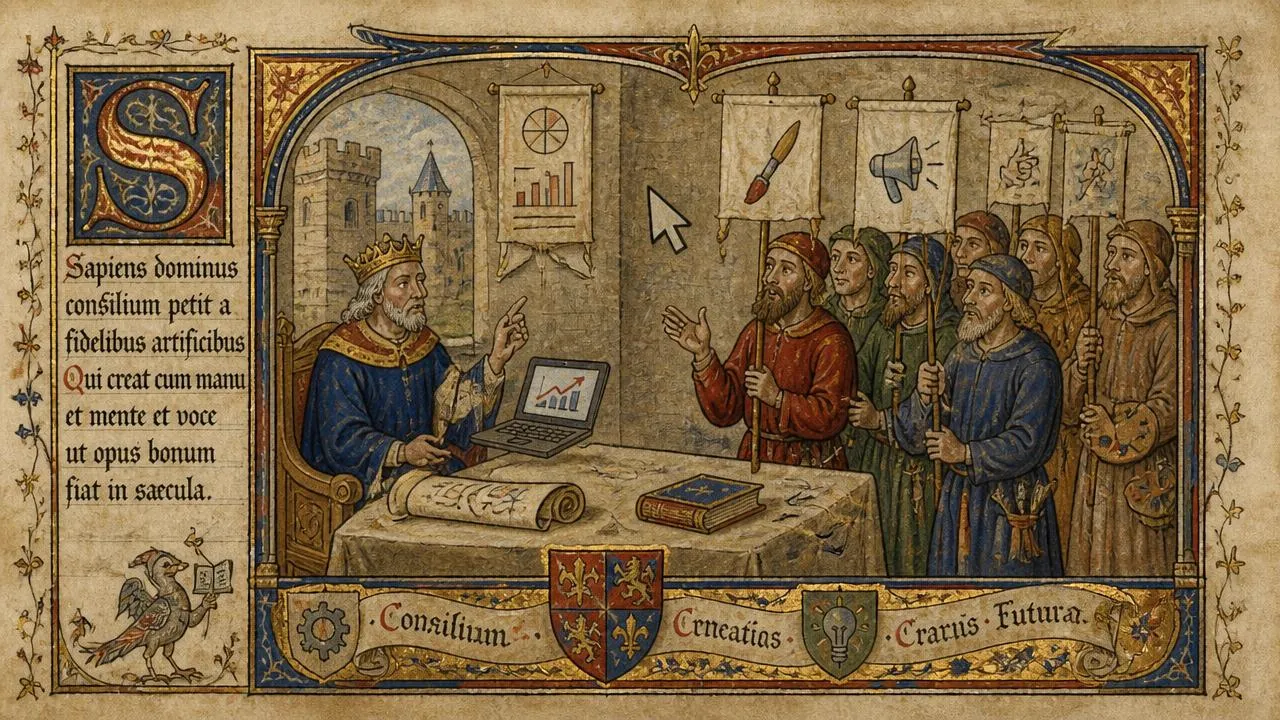
When a B2B company reaches the point where marketing needs more structure, the Fractional CMO vs Agency question often comes up quickly.
Both models give companies access to experienced marketing professionals while keeping the organisation flexible. Yet they solve different problems. An agency primarily brings specialist resources and execution capacity, while a Fractional CMO brings senior marketing leadership inside the company.
The choice depends on what your business needs most right now: additional execution capacity, strategic direction, or stronger coordination between marketing and commercial objectives.
For many SMEs, understanding this distinction can prevent months of activity that produces plenty of marketing output but limited business impact.
What Does a Fractional CMO Actually Do?
A Fractional Chief Marketing Officer is an experienced marketing leader who works with a company for part of the week or month. The company gains access to senior-level marketing expertise while maintaining a flexible management structure.
A Fractional CMO typically takes responsibility for areas such as:
- marketing strategy and priorities;
- positioning and value proposition;
- customer and market segmentation;
- lead generation strategy;
- marketing budget allocation;
- KPIs and performance measurement;
- coordination of internal marketing resources;
- management of agencies and external specialists;
- alignment between marketing and sales;
- go-to-market planning.
The important word here is responsibility. A Fractional CMO usually works alongside the CEO, sales director and internal team. Their role includes making decisions, setting priorities and ensuring that different marketing activities contribute to the same commercial objectives.
This creates an internal leadership layer between company management and the people executing campaigns. You can explore this approach further in the Fractional CMO service for European SMEs.
What Does a Marketing Agency Bring to the Company?
A marketing agency gives a company access to a team of professionals with specific execution capabilities. Depending on the agency, those capabilities may include SEO, paid advertising, content marketing, social media, branding, web development, email marketing or marketing automation.
This structure can be particularly useful when the company already understands:
- who it wants to reach;
- how it wants to position itself;
- which channels matter;
- what the marketing objectives are;
- how success will be measured.
In that situation, the company can give an agency a clear brief and use its specialist capabilities to execute the plan.
For example, a B2B manufacturer that already has a defined international expansion strategy may hire an agency to manage Google Ads in Germany or develop SEO content for selected product categories. The strategic decision has already been made. The agency provides the resources required to turn that decision into campaigns.
Fractional CMO vs Agency: The Main Difference Is Ownership
The clearest way to understand Fractional CMO vs Agency is to look at who owns the marketing decisions.
An agency usually receives a scope of work. The company may ask it to increase organic traffic, manage LinkedIn campaigns, generate leads, redesign the website, create content or improve advertising performance. Someone still needs to decide how these activities fit together.
A Fractional CMO fills that leadership role. They may decide that SEO deserves 40% of the available investment while LinkedIn Ads should initially receive 15%. They may identify a positioning issue that needs to be solved before additional advertising investment. They may also discover that the real bottleneck sits between marketing-qualified leads and the sales follow-up process.
This broader perspective changes the conversation from “How can we improve this campaign?” to “Where should the company invest its next marketing euro?” That distinction matters particularly in B2B companies with long sales cycles and multiple decision-makers.
McKinsey''s research on B2B buying shows how buyers increasingly move between digital, remote and personal interactions during the purchasing process. Managing these journeys requires coordination across several channels rather than isolated campaign optimisation. McKinsey''s B2B Pulse research highlights the growing importance of orchestrating these different customer interactions.
Strategy and Execution Require Different Skills
One common source of frustration between companies and agencies comes from expectations. A CEO hires an SEO agency and expects business growth. The agency improves rankings and increases organic traffic, so from the agency''s perspective the project may be performing well. Yet the CEO may still see limited commercial impact.
Several strategic questions could sit behind that gap:
- Are the targeted keywords attracting the right companies?
- Does the website communicate a compelling value proposition?
- Is the traffic reaching pages designed around buyer intent?
- Are leads being qualified correctly?
- Does sales follow up effectively?
- Does the company have an attractive offer for prospects early in their buying journey?
Each question extends beyond SEO execution. The same pattern applies to advertising agencies, social media agencies and content agencies. Their expertise can generate significant value when the broader marketing system gives their work a clear direction.
A Fractional CMO can build that system and then use specialised agencies where their expertise creates the greatest leverage.
Who Coordinates Multiple Marketing Suppliers?
Many growing B2B companies gradually accumulate suppliers. One agency manages SEO. A freelancer writes articles. Another partner handles the website. Someone internally manages LinkedIn. Sales uses a CRM, while marketing has its own automation platform.
Every supplier may perform competently within their individual area. The company still needs somebody to connect the pieces, deciding:
- which activities receive priority;
- how budgets are distributed;
- which audience each channel addresses;
- which KPIs matter;
- how leads move from marketing to sales;
- which activities deserve further investment.
This coordination role is one of the strongest arguments for fractional marketing leadership. The CMO Survey also highlights organisational collaboration, technology integration, talent and strategic leadership among the factors influencing marketing effectiveness, and reports that companies keep combining internal capability building with external partnerships.
When a Marketing Agency Makes Sense
An agency can be a strong choice when your company already has marketing leadership and needs additional capabilities.
Imagine a company with an experienced marketing director who has already developed the annual strategy. The priorities are clear: generate demand in two European markets, improve visibility for selected commercial keywords, create supporting content for the sales process and measure opportunities generated through each channel.
The marketing director can select agencies for SEO, advertising or content and manage them against these objectives. Here, specialist execution creates value because strategic ownership already exists internally.
An agency also works well for clearly defined projects such as a website redesign, a paid media campaign, a new visual identity or a technical SEO project.
When a Fractional CMO Makes Sense
A Fractional CMO becomes particularly valuable when the company has marketing activity but requires stronger direction. Typical situations include:
- the founder still makes most marketing decisions;
- several suppliers work independently;
- marketing produces leads while sales questions their quality;
- the company wants to enter a new market;
- budgets have grown faster than marketing governance;
- an internal marketing specialist needs senior guidance;
- management struggles to connect marketing metrics with revenue;
- priorities frequently change according to immediate requests.
In these situations, adding another execution supplier may simply create another activity to coordinate. Marketing leadership creates a framework for deciding what deserves attention first.
The starting point is often an audit of positioning, channels, data, resources and previous performance. From there, the company can build a focused operating roadmap. The article Why a Marketing Strategy Is Important for Your Business explores this planning process in greater detail.
Fractional CMO vs Agency: How the Costs Work
Price comparisons can be misleading because the two investments purchase different capabilities. An agency fee usually pays for a defined amount of execution. A Fractional CMO fee pays primarily for leadership capacity and senior marketing judgement.
A company may therefore work with both. For example, a €10 million B2B company could have one internal marketing coordinator, a Fractional CMO providing strategic leadership, an SEO specialist, a performance marketing agency and a freelance designer.
The Fractional CMO decides how these resources should work together, reviews performance and reallocates investment according to results. This model allows companies to build a flexible marketing department around the capabilities they actually require, giving SMEs access to specialised skills while keeping the marketing organisation relatively lean.
More advantages of this structure are covered in Benefits of Working with a Fractional Marketing Manager.
Marketing and Sales Alignment Also Matters
The Fractional CMO vs Agency decision becomes even more important when marketing needs to integrate closely with sales. This is common in B2B.
A campaign may generate 40 enquiries, yet the number alone says little about its commercial value. Management needs to understand how many fit the ideal customer profile, how many become qualified opportunities, how quickly sales contacts them, where prospects leave the funnel, which channels contribute to revenue and how acquisition cost compares with customer value.
These questions require conversations across marketing and sales. Harvard Business Review has also examined the importance of alignment between these functions and the value of shared objectives across the customer acquisition process.
A Fractional CMO can participate directly in this process because they operate inside the company''s decision-making structure.
Can a Fractional CMO and an Agency Work Together?
Absolutely. In many B2B organisations, this is the most effective configuration. The Fractional CMO provides direction and governance, while agencies provide specialist execution.
- Fractional CMO: defines positioning, ICP, objectives, budgets, channel priorities and KPIs.
- Internal marketing team: manages daily activities, company knowledge and coordination.
- Agencies and specialists: execute specific disciplines such as SEO, advertising, design, development or marketing automation.
- Sales team: shares market feedback, manages opportunities and reports lead quality.
Each resource has a clear responsibility. This structure also gives agencies better briefs: they receive clearer objectives and can focus their expertise on problems they are equipped to solve.
A Simple Way to Choose
Before choosing between a Fractional CMO and an agency, ask one question: do we already know what our marketing organisation should do over the next 12 months and why?
When the answer is clear and supported by data, an agency can provide the execution capacity required to accelerate the plan. When priorities remain fragmented, marketing ownership sits mainly with the founder, or different suppliers pursue separate objectives, fractional leadership can create the structure first. Then agencies can become part of that structure.
The decision therefore starts with the business problem rather than the supplier category. A company looking for more content needs content capacity. A company looking for more qualified pipeline needs to examine the complete acquisition system. A company preparing international expansion needs decisions around markets, positioning, channel strategy and sales integration before campaigns scale.
Which Model Fits Your Company?
For many B2B SMEs, the answer evolves as the company grows. An agency can provide specialist talent and execution power. A Fractional CMO provides senior marketing leadership and coordinates marketing around commercial priorities. Some companies need one of these resources; others gain more value from combining them.
The key is identifying the capability currently missing from your organisation. If your strategy is established and your team needs extra execution capacity, a specialised agency may be the logical next step. If marketing has become difficult to prioritise, measure or coordinate, a strategic marketing consulting engagement with a Fractional CMO can help create the operating framework that connects activities, people and budgets with business objectives.
That clarity usually comes before scale. And once the direction is clear, every agency, freelancer and internal marketer can contribute more effectively to the same goal.
Want to talk it through?
If this article raised questions about your own marketing, a 30-minute intro call is the fastest way to find out whether I can help.